
How Digital Tools Are Transforming Church Management in 2026
Years back, church operations looked different than they do now. Even though faith goals stay steady, how congregations handle people, money, and events keeps shifting.
Nowadays, some churches start using online tools made just for handling daily tasks easier.
Instead of piles of paper, they turn to programs like Tabernacle or Planning Center. Breeze also fits into this shift, offering smoother ways to stay on track. These systems bring order where chaos once lived. Time once lost returns slowly. Communication grows clearer without shouting across rooms. Digital steps replace dusty filing cabinets. Efficiency sneaks in quietly. Focus shifts from clutter to purpose.
Folks guiding churches find breathing room when these tools handle routine tasks, freeing energy for spiritual work alongside neighbors. Instead of swapping old ways, the tech eases clutter so attention lands where it matters most.
The Traditional Challenges Churches Face
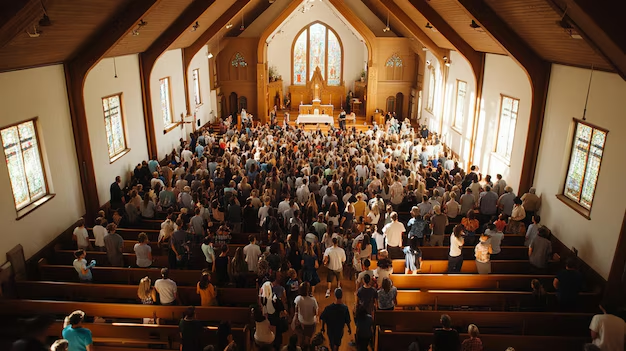
Years passed before churches began shifting away from handwritten logs. Notebooks once held every name, while budgets lived inside basic spreadsheet files. Meetings got organized by paper trails, each detail jotted down day by day. Ledgers stacked up beside sign-in sheets, filled row after row.
Fewer problems showed up at first, when church groups stayed small. Growth changed that – suddenly, gaps appeared where solutions once worked.
Common challenges included:
- Misplaced member records
- Difficulty tracking
- attendance trends
- Time-consuming
- financial reporting
Communication gaps among members
Heavy dependence on volunteers for administration
Finding their duties growing, church leaders ended up buried in spreadsheets instead of connecting with others. Later on, paperwork took over hours once used for helping individuals face challenges.
Why Churches Are Moving Toward Digital Solutions
Folks thought digitizing was just for companies, maybe schools. Yet places of worship started seeing benefits too – structure in tech helps them function better.
Fueled by shifting patterns, this shift gains momentum. Movement comes from fresh pressures taking hold. Forces build quietly behind the scenes. A mix of subtle pushes shapes what happens next.
Growing Congregations
When groups grow, handling records gets harder. Tools online let organizers store details clearly, so data stays handy whenever needed.
Increased Activities
Running a church today means juggling youth groups, community projects, big meetings, support talks, plus digital gatherings. Trying to manage it all by hand? That road gets rocky fast.
Need for Transparency
Money matters become clearer when everyone sees them. When giving happens online, records sort themselves without extra steps.
Improved Communication
People want quick news online instead of waiting for the usual once-a-week message.

Key Areas Where Technology Is Transforming Church Management
1. Member Management
Finding ways to handle members in one place – technology makes that possible through smarter systems.
A lone digital file might hold what once spilled across many pages. Churches could gather it all – names, dates, events – not split up anymore. This one system keeps things whole. Information flows together through linked entries. No more hunting through separate ledgers. Everything connects inside this unified setup
- Contact details
- Family
- connections
- Attendance
- tracking
- Ministry
- involvement
Volunteer participationNow leaders can see how involved people are, which makes support easier to give when it’s actually needed.
Should a person fade out, those in charge might reach out fast – connecting one on one to bring them back into the loop. A quiet moment often leads right to a call or message from someone guiding the group.
2. Financial Management
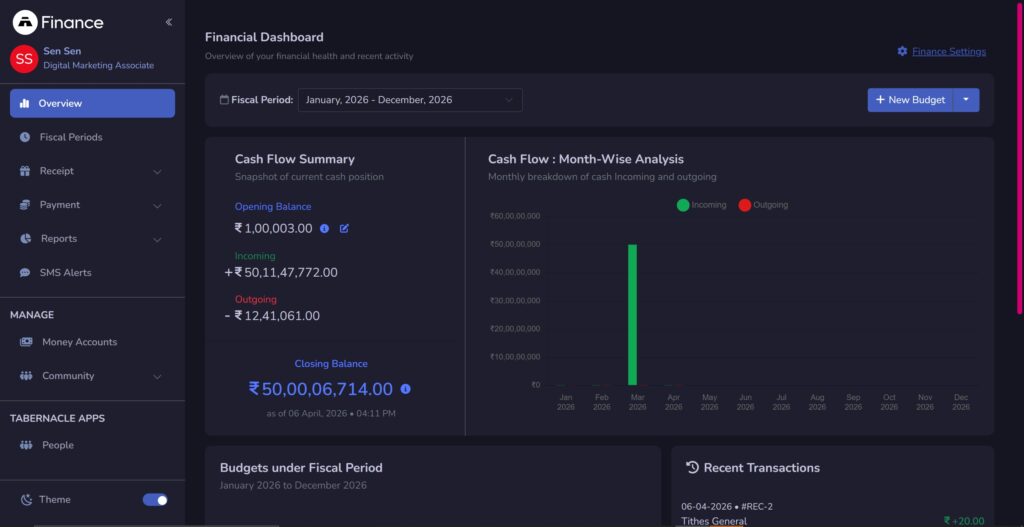
Funds within a congregation need careful oversight so trust stays intact.
Digital finance systems allow churches to record:
- Tithes and offerings
- Donations
- Church expenses
- Budget tracking
- Financial reporting
Fewer mistakes happen when reports run on their own, yearly checkups become less tangled that way.
A few tools mix money oversight with keeping track of people, like Tabernacle does. One place holds everything so church tasks don’t scatter across apps. Keeping things together makes follow-up easier later on.
3. Plan Events and Services
Frequent events fill church schedules – morning sermons appear alongside evening Bible studies. Worship times shift between weekdays and weekends without warning. Prayer circles meet before sunrise or long after dark. Teen groups gather at odd hours, sometimes outside. Outreach efforts pop up in neighborhoods unexpectedly. Special events replace regular routines now and then.
Digital scheduling tools help administrators:
- Avoid event conflicts
- Coordinate volunteers
- Send reminders
- Improve attendance participation
Folks on top find it easier to line up tasks, while everyone else keeps pace without hiccups.
4. Connecting People Through Open Dialogue
Folks connect when they talk – without words, a church loses its rhythm. A shared message keeps people moving together, even through quiet moments.
Digital platforms allow churches to stay connected through:
- Email announcements
- SMS reminders
- Event notifications
- Group messaging
Finding ways beyond Sunday sermons helps faith groups stay connected daily. Weekday check-ins replace one-day talks with steady presence.

Popular Church Management Tools Today
Not every church picks a system fast. Picking one means looking at several options first. Systems people check out tend to show up again and again across different places
- Tabernacle – brings people and money matters together without clutter. Organization flows naturally when records stay clear, updates happen smoothly. One space holds it all – members, payments, progress – with less friction. Smooth handling of daily tasks becomes possible, even likely. Structure grows around real needs, not extra steps. Simplicity sticks, confusion fades. Details remain close, never lost in layers.
- Planning Center – Known for worship planning and team coordination.
A fresh start each day means easier tracking of everyone involved. Smooth updates keep records clear without extra steps. One tool handles check-ins while another shapes reports naturally. Follow progress through clean views that just work. Little effort brings steady results over time. - ChurchTrac – Affordable solution for smaller congregations.
A fresh take on church tools, A single house of worship might pick its system because the crowd fits a certain way inside. Size matters when screens light up faces near the back row. Comfort with gadgets shapes what gets switched on each Sunday morning. Some teams need simpler menus, fewer buttons blinking at once. How leaders organize tasks often decides which software stays or goes.
Benefits for Small Churches and Growing Ministries
Not everyone realizes it, yet small congregations can make good use of digital tools too.
A few folks stepping into many roles can make a real difference when there are fewer people around. What happens is lighter loads spread across willing hands help keep things moving smoothly.
Technology helps by:
- Reducing paperwork
- Saving administrative time
- Preserving long-term records
- Improving coordination among leaders
- Supporting transparency
Starting small doesn’t stop anyone – simple tools built just for church groups make stepping into tech easier than expected. Most find their way without prior skills when the system fits how they actually work.
The Future of Church Administration
Facing ahead, church leadership may blend old ways with new tools. Still, the core practices could stay rooted even as digital methods slip in.
Emerging trends include:
- Mobile-friendly
- administration
- Online member portals
- Hybrid worship coordination
- Data-supported community outreach
- Improved volunteer organization
Still, churches keep doing what they’ve always done – tech just helps them do it better.
Conclusion
Step by step, churches change with the times but keep their core alive. Right now, shifting into digital spaces is just part of how they grow.
Finding new ways to handle tasks helps churches ease the load of daily chores. Without heavy paperwork weighing them down, honesty stays clear across teams. When messages flow better between members, attention shifts naturally toward helping others. Using simpler systems opens space for deeper work among people.
Focused on backing rather than swapping out old ways, digital tools help houses of worship stay structured, linked, yet ready ahead.