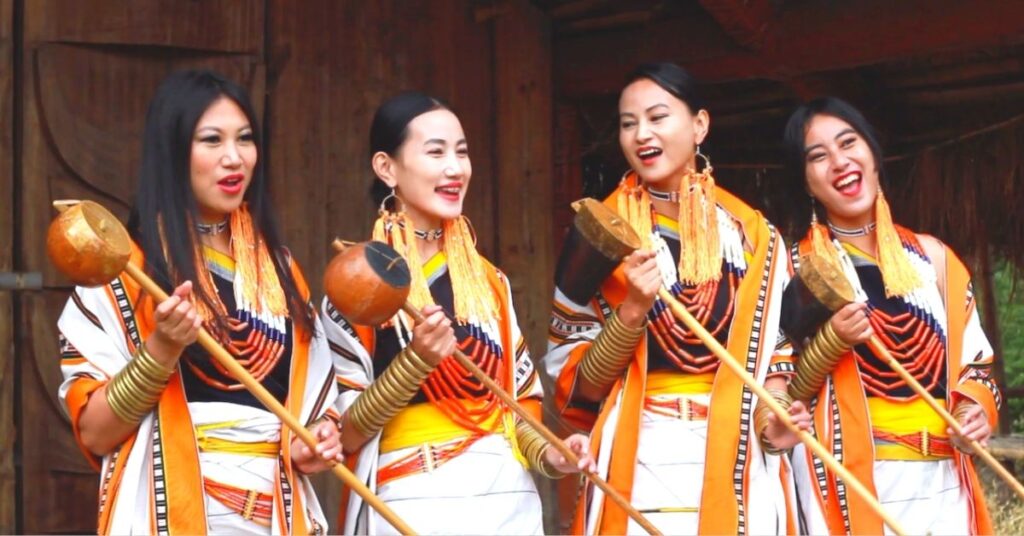
Nagaland is a land of rhythm, celebration, and community. From tribal dances echoing through the hills to vibrant festivals that bring the state alive—experience it all with Rutsa Trails.
1. The Heartbeat of Music
Nagaland is known as the ‘Land of Festivals,’ but music is its true heartbeat. From soulful folk songs that narrate ancestral stories to modern Naga rock bands that have taken Asia by storm, music here is a way of life. Villages often come alive with the sound of log drums, bamboo flutes, and voices that carry across valleys.
2. Festivals that Unite All Tribes
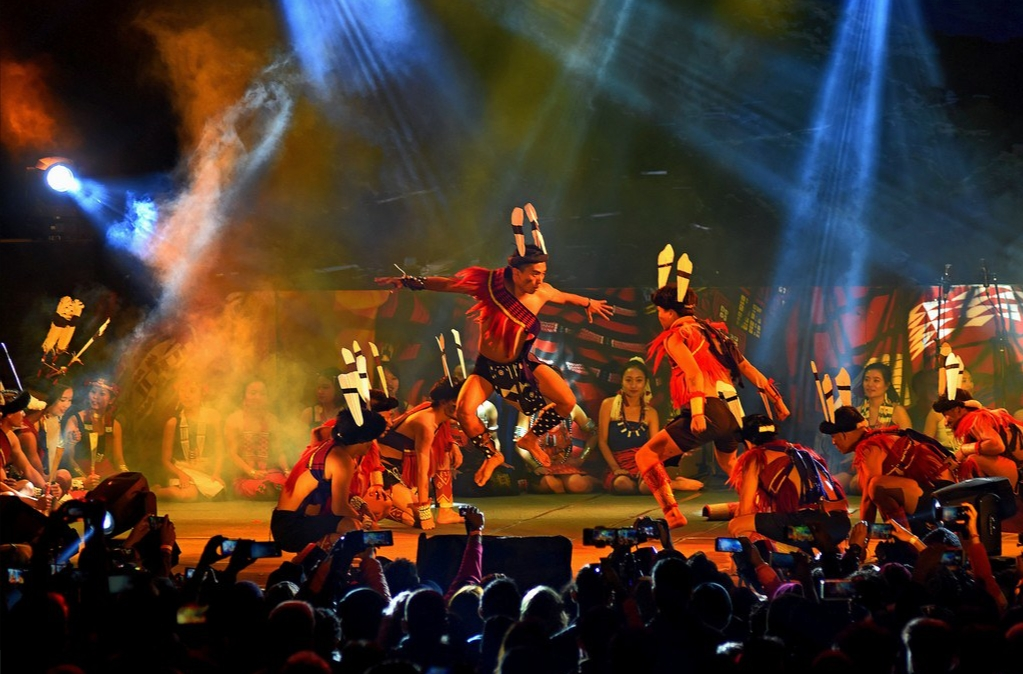
The Hornbill Festival in Kohima is the most famous, where all 16 Naga tribes come together to showcase their culture. But beyond Hornbill, smaller festivals like Moatsu (Ao tribe), Sekrenyi (Angami tribe), and Tokhu Emong (Lotha tribe) are deeply rooted in tradition. These events are not just performances—they are living heritage, where dance, wrestling, and feasts bring communities closer.
3. Tribal Traditions You Can Witness
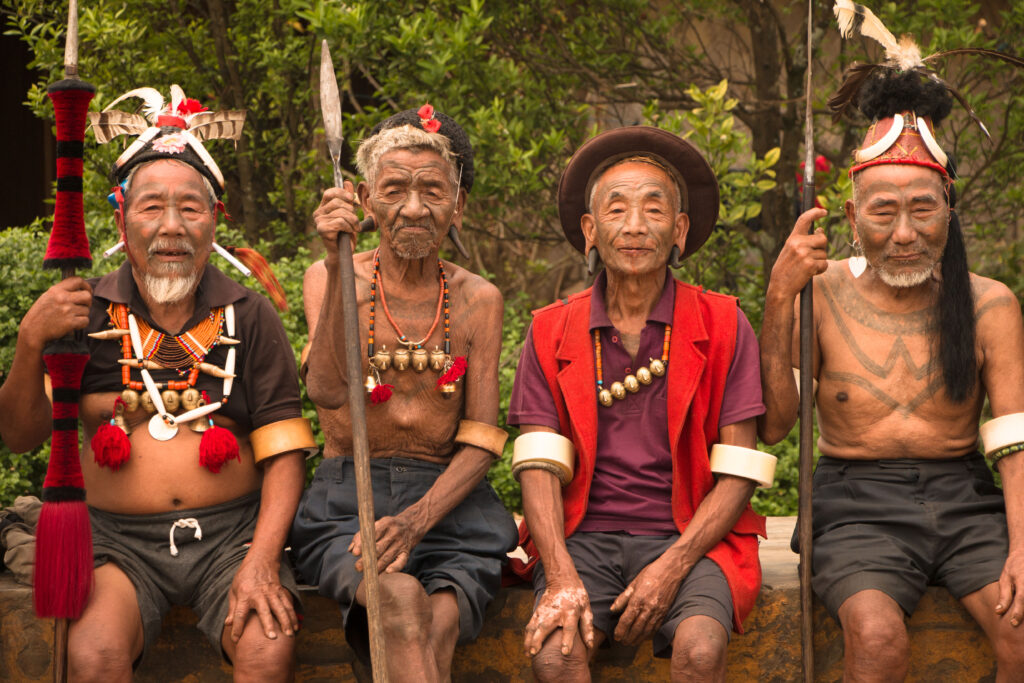
Each tribe of Nagaland has its own distinct customs—from the Angami’s terraced farming practices to the Konyak’s tattooed elders who symbolize a warrior past. These traditions are not staged for show but practiced as part of daily life. Traveling with Rutsa Trails gives you a chance to experience them up close.